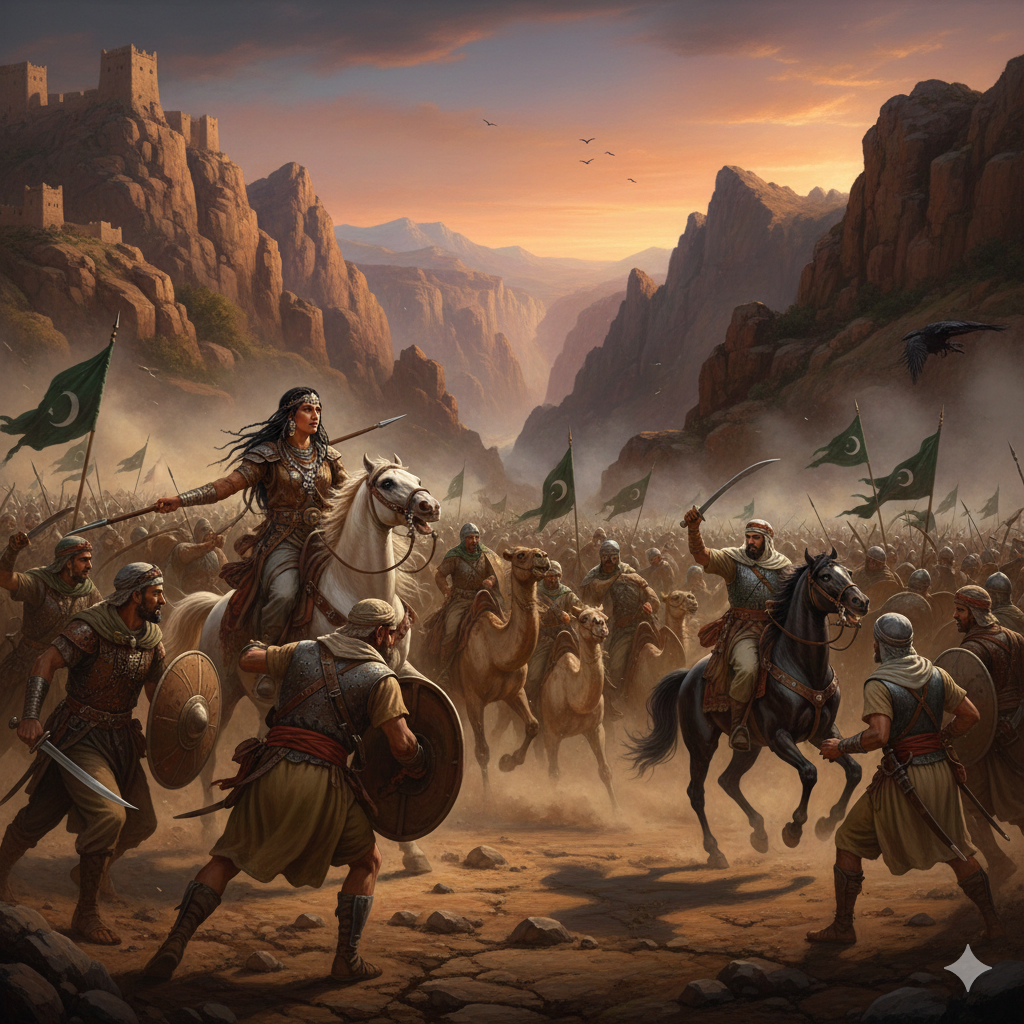
Dihya (The Kahina): The Warrior Queen – 迪希亚(卡希娜):女战士女王
The story of Dihya, known to history by the moniker Al-Kahina (the “Seer” or “Priestess”), is one of the most cinematic sagas of the 7th century. She was a queen of the Aurès Mountains (modern-day Algeria and Morocco) and a leader of the Amazigh (Berber) resistance against the expansion of the Umayyad Caliphate.
迪希亚的故事,被历史冠以“卡希娜”(“先知”或“女祭司”)的称号,是7世纪最具史诗色彩的传奇之一。她是奥雷斯山脉(今阿尔及利亚和摩洛哥)的女王,也是阿马齐格人(柏柏尔人)抵抗倭马亚哈里发国扩张的领袖。
The Rise of the Seer-Queen – 先知女王的崛起
In the late 600s, the Umayyad armies were sweeping across North Africa, aiming to consolidate control from Egypt to the Atlantic. Following the death of the previous Berber leader, Kusaila, Dihya emerged as the undisputed war chief of the Jarawa tribe.
在公元600年代末,倭马亚军队横扫北非,旨在巩固从埃及到大西洋的控制权。在前一位柏柏尔领袖库赛拉去世后,迪希亚成为了贾拉瓦部落无可争议的战酋。
She was not just a military strategist but a spiritual figure. Legends claim she possessed the gift of prophecy—some say she could “hear” the movement of enemy troops through the earth or communicate with birds. Whether it was divine foresight or a genius-level understanding of terrain, she managed to unite the disparate, often feuding Berber tribes into a single, formidable wall of resistance.
她不仅是军事战略家,更是一个精神领袖。传说她拥有预言天赋——有人说她能通过大地听到敌军的动向,或者与鸟类交流。无论是神圣的预见还是对地形的卓越理解,她成功地将分散且经常内斗的柏柏尔部落团结成一道坚不可摧的抵抗之墙。
The Battle of Meskiana – 梅斯基亚纳之战
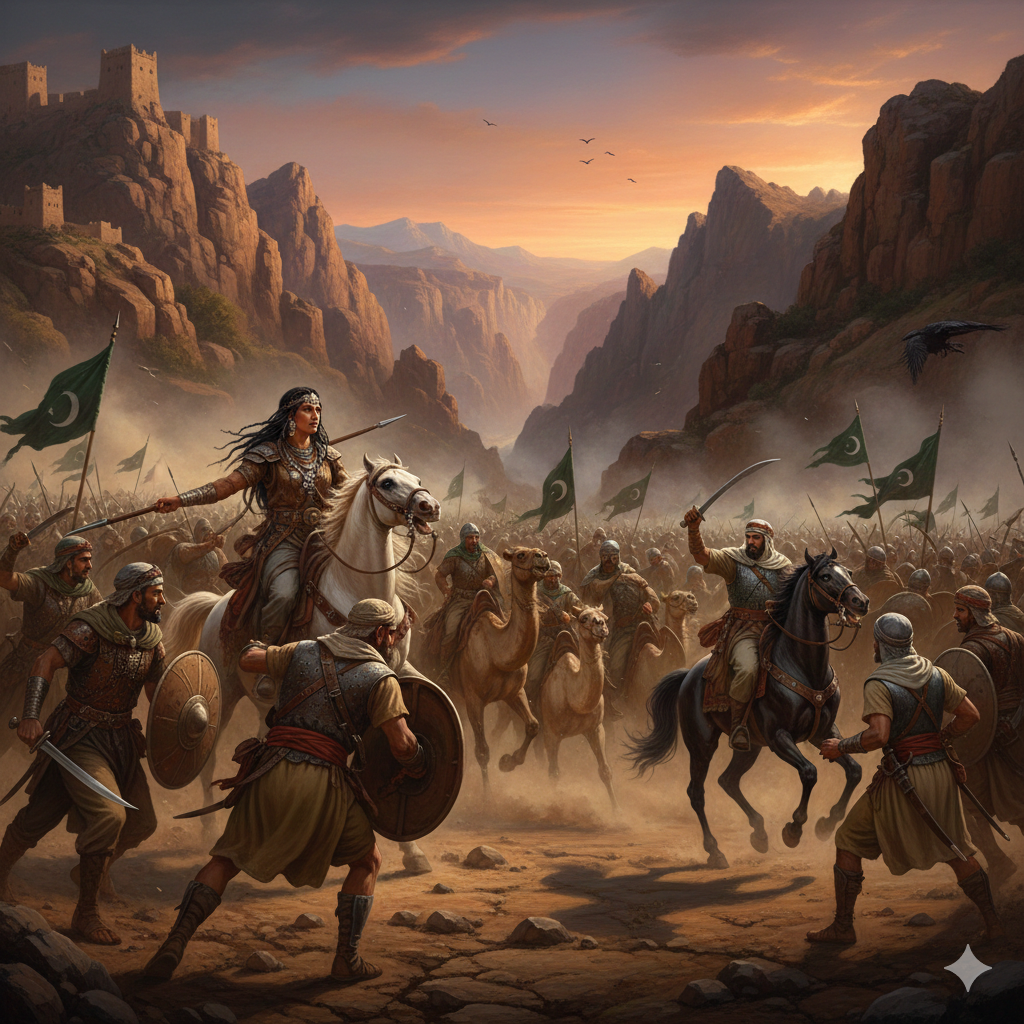
In 698 AD, the Arab general Hassan ibn al-Nu’man marched west after capturing Carthage, confident he could crush the Berber tribes. He met Dihya’s forces at the Battle of Meskiana (often called the “Battle of the Camels”).
公元698年,阿拉伯将军哈桑·伊本·努曼在攻占迦太基后向西进军,自信能一举击溃柏柏尔部落。他在梅斯基亚纳战役(常被称为“骆驼之战”)中遭遇了迪希亚的军队。
Dihya used the rugged geography to her advantage. Her forces didn’t just win; they routed the Umayyad army so thoroughly that Hassan was forced to retreat all the way back to Cyrenaica (modern Libya). For five years after this victory, Dihya ruled an independent Berber empire that stretched across much of the Maghreb.
迪希亚利用崎岖的地形占据优势。她的军队不仅取得了胜利,更是彻底击溃了倭马亚军队,以至于哈桑被迫一直撤退到昔兰尼加(今利比亚)。在这场胜利后的五年里,迪希亚统治了一个独立的柏柏尔帝国,版图横跨马格里布的大部分地区。
The Scorched Earth and the Fall – 焦土政策与陨落
The Conquest of Valencia 征服瓦伦西亚
The pinnacle of his career came in 1094. Operating independently of King Alfonso, El Cid besieged and conquered the wealthy kingdom of Valencia. While he technically held it in the name of the King to mend their relationship, he ruled Valencia as a de facto prince until his death in 1099.
他职业生涯的顶峰出现在1094年。熙德独立于阿方索国王,围攻并征服了富饶的瓦伦西亚王国。虽然他名义上以国王之名统治以修补关系,但他实际上将瓦伦西亚作为一个亲王统治,直到1099年去世。
Dihya knew the Umayyads would return with a larger force. Fearing that the invaders were drawn to the wealth of the North African cities and farmlands, she made a controversial and tragic decision: Scorched Earth.
迪希亚知道倭马亚人会带着更强大的军队卷土重来。她担心入侵者是被北非城市和农田的财富所吸引,因此做出了一个备受争议且悲剧性的决定:焦土政策。
She ordered the destruction of orchards, fields, and fortifications, hoping to make the land so desolate that the Arab armies would find nothing worth conquering. This move, however, backfired. It alienated her own urban subjects—the farmers and traders whose livelihoods were tied to the land—weakening her internal support just as the enemy returned.
她下令摧毁果园、农田和防御工事,希望让这片土地变得荒芜,使阿拉伯军队找不到任何值得征服的东西。然而,这一举动适得其反。它疏远了她自己的城市居民——那些生计与土地息息相关的农民和商人——在敌人卷土重来之际削弱了她的内部支持。
n 703 AD, Hassan returned with a massive, reinforced army. The final stand took place near a well that still bears her name today: Bir al-Kahina. Dihya fought alongside her sons until the very end. According to some accounts, she sent her sons to the Umayyad camp before the final battle, advising them to convert to Islam and join the victors to ensure the survival of their lineage—a final act of pragmatic prophecy.
公元703年,哈桑带着一支庞大且增援的军队卷土重来。最后的抵抗发生在一个至今仍以她名字命名的水井旁:比尔·卡希娜。迪希亚与她的儿子们并肩作战,直到最后一刻。据一些记载,她在最后一战前将儿子们送到了倭马亚营地,建议他们改信伊斯兰教并加入胜利者,以确保家族血脉的延续——这是实用主义预言的最后行动。
Legacy – 遗产
Dihya remains a powerful symbol of Amazigh identity. She is remembered not as a defeated rebel, but as a “National Mother” who fought for the autonomy of her people. To the Umayyads, she was a terrifying sorceress; to the Berbers, she was a protector who stood against the most powerful empire of her time.
迪希亚仍然是阿马齐格人身份的强大象征。她被铭记的不是一个失败的反叛者,而是一位为人民自治而战的“民族母亲”。对倭马亚人来说,她是一位可怕的女巫;对柏柏尔人来说,她是一位对抗当时最强大帝国的守护者。